At the dawn of scaling AI . . . we stand before mirrors of our own species. . . It is now time to speak, to act, and to ensure that as we mass deploy synthetic intelligence, we help it move beyond our recurring imperfections.

How ideas spread and take over.

Memes, frames, and narratives that jump between minds and compete for attention and control.

TLDR

You need superhuman patience and the grit to tough out something truly awful. This saying hilariously pairs a plea for mental patience with a crude request for “resistance” in your backside. It’s a dark, exasperated joke for when you’re dealing with endless bureaucracy or an incredibly annoying person. You say it with a wry smile, acknowledging how much fortitude you need.

Context

This phrase highlights a Venezuelan way of coping: using dark humor and crude language to face adversity. It’s not an angry outburst. Instead, people use it among close friends with a sarcastic, resigned frustration, often with a knowing smile. Think of it as a shared sigh of “here we go again.”

TLDR

Someone’s got a quirky obsession, and you just shrug and let them be. This saying literally means “Each madman with his own theme,” using the image of a “madman” to highlight how unusual or intense someone’s singular focus can seem. It’s a lighthearted way to say “To each their own,” accepting their unique interests without judgment.

Context

This phrase shows how Venezuelan culture accepts individuality and eccentricity. People use it lightheartedly when someone is engrossed in a peculiar hobby or to humorously justify their own unusual pursuits. It acknowledges unique habits without judgment, often with a mild, resigned tone.

What it’s like to be human under all this.

Wiring, traits, empathy, and dysfunction, and how they play out in work, love, and power.

Claim

Empathy is not one switch. It is a stack: feeling with someone, seeing their view, and (later) judging actions against an inner sense of right and wrong. Most of that stack is learned as brains and norms mature; systems can aim it without erasing it.

Grounding

Nunner-Winkler & Sodian (1988, Child Development): young children often tied a wrongdoer’s feelings to outcomes; older ones more to moral features; only after ~6 did a happy wrongdoer read as worse than a sorry one. Source: Children’s understanding of moral emotions (JSTOR).

Claim

We say we love choice, but past a point it turns on us. When options multiply and stakes rise, choice stops feeling like freedom and starts to feel like anxiety. We still reach for the story that we are in charge, even when we hand the real work to someone else.

Grounding

Leotti, Iyengar, and Ochsner (2010) argue the pull toward choice and perceived control runs deep enough to look biologically motivated (choice rewarding, losing it aversive; corticostriatal circuitry implicated). Source: Born to Choose (PMC).

How tools and systems reshape how we think.

AI models, platforms, metrics, and habits that train, outsource, or dull human intelligence.
What you probably do not know yet

  • When a rat pauses at a maze junction, its brain cells fire in a sequence matching the paths it could take, simulating the future before it moves.
  • Animals can experience regret. When they make a bad choice, their brain replays the better option they walked away from to update their future strategy.
  • Chimps play complex mind games, like pretending not to see hidden food so a rival will not steal it.
  • AI models can pass tests designed to measure human social awareness, even though they lack the brain circuits that actually understand other minds.

What you will have after

A clear picture of how the brain evolved from simple prediction to complex social simulation, and why today’s AI might score high on our tests while thinking nothing like us. Max Bennett connects neuroscience, animal behavior, and AI into one fascinating timeline.

How stories turn into rules.

Religions, money, laws, and office politics that script what feels true, normal, and untouchable.

Claim

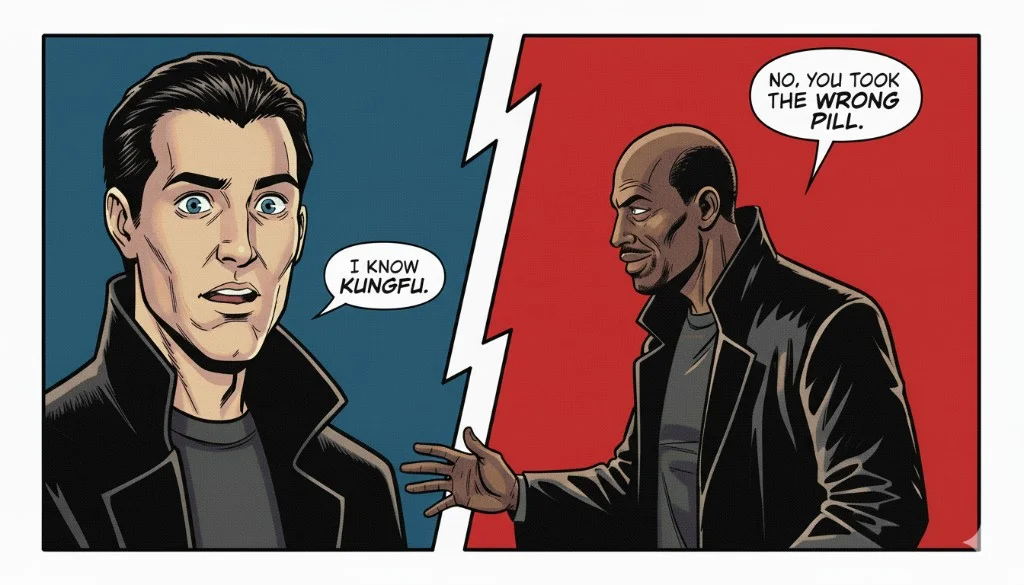
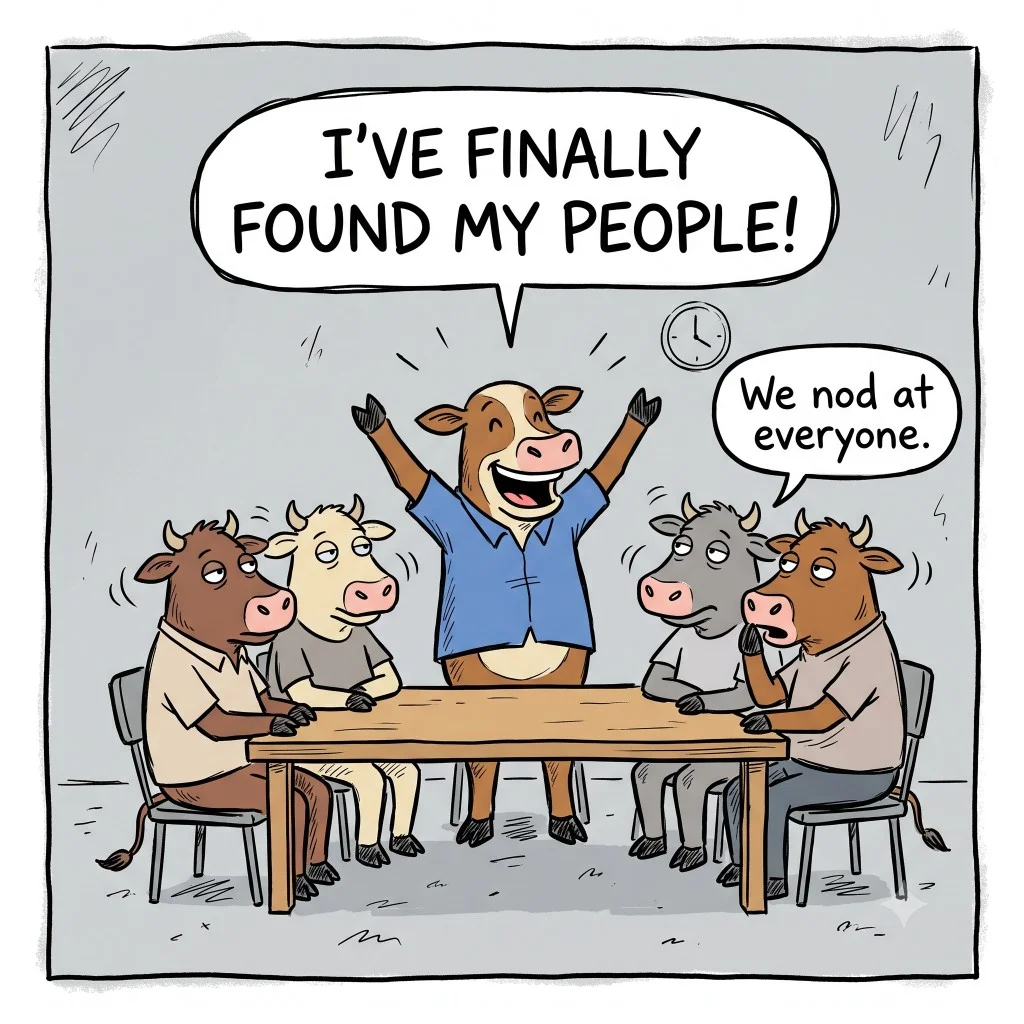
We only accept truth as a meme …

… so it never hits the amygdala hard enough to fight for it.

The brain doesn’t care about “truth.” It cares about keeping its model of the world intact. Anything that threatens that model feels like danger.

So we downgrade truth into memes. We turn destabilising facts into jokes, clips, and hot takes. That makes them easy to look at and easy to ignore.

Grounding

Powers and LaBar (2018) propose a taxonomy of psychological distancing, a neurocognitive model of how distance regulates emotion, and a supporting meta-analysis.

Source: Regulating emotion through distancing (PMC)

Claim

Real communication isn’t just about words; it’s about shared context, practice, and experience. We only truly “sync” meanings with others when we share genuine time and experiences, not through superficial activities. Without this, even the same words can mean different things to different people.

Grounding

Shared reality is the sense that you and another person experience the world the same way, not only agreeing on facts, but feeling aligned on what is real and what matters. Epistemic companions are the close others you learn and think with; Rossignac-Milon & Higgins (2018) show how shared feelings, practices, and identity in those relationships build that alignment over time. Source: Epistemic companions: shared reality development in close relationships (PDF).

Claim

Memes are units of cultural transmission, Dawkins’s analogue to genes, that hop from brain to brain by imitation. They can harden into norms, identities, and shared fictions, recruit emotion and tribal defense, and behave like agents in how people protect or spread them.

Grounding

The word meme was introduced in Richard Dawkins’ The Selfish Gene (1976) as a replicator of culture; the Greek root mimema (“that which is imitated”) is folded into a rhyme with gene. Overview: Meme (Wikipedia).