Human-Condition
What it’s like to be human under all this.
Wiring, traits, empathy, and dysfunction, and how they play out in work, love, and power.
Human-Condition · Mental-Processes
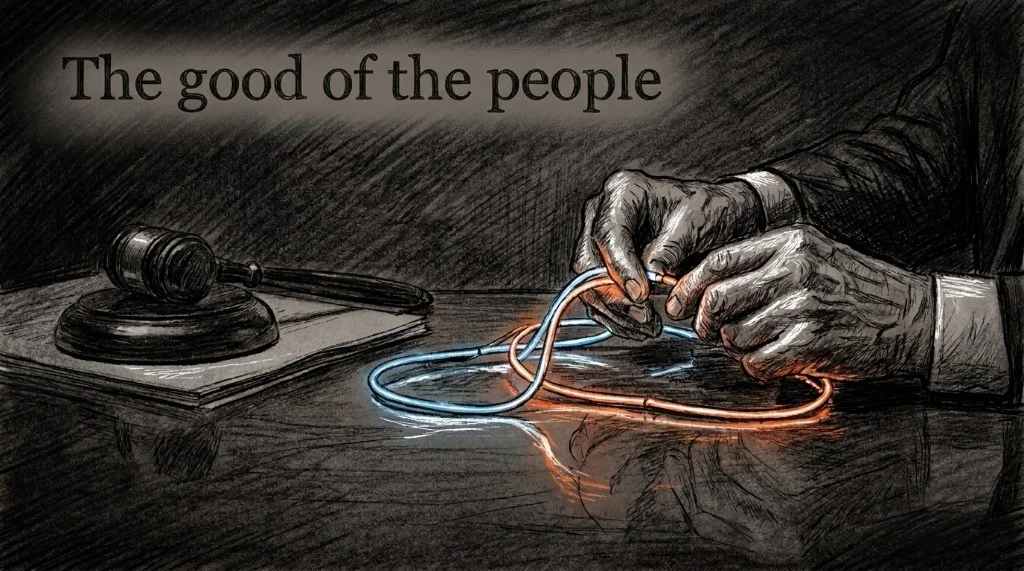
😇 Good guys make the rules
After you prove you are one of the good guys, the next shortcut gets cheaper if you can rename it and still call yourself fair. You can even invent that proof right before you need it. The rules stay loud for everyone else.

Human-Condition · Social-Behaviour
🧠 Antisocial wiring is human. Why is it so hard to name?
Antisocial and psychopathic traits sit across the human range of emotion, reward, and social processing. Under DSM rules, antisocial personality disorder only counts if there were behavior problems before age 15. Miss that childhood record and the adult pattern can still be there, with real costs, and still get no diagnosis. Naming that wiring is how we measure it, treat it, and build guardrails around it.

Human-Condition · Mental-Processes
🦑🧠 You think you think?
When tools draft, sort, and summarize for you, they mostly eat the habit plane: inherited conclusions, reactive loops, cognition that runs like muscle memory. What stays yours is the metacognition plane: noticing which parts you outsourced, and learning to think ahead of your thoughts.

Human-Condition · Social-Trust
🫥 You lie, but then, you trust
Deception shows up across species; humans are not special for lying. What does not add up is truth bias: you lie, yet you still default to believing the next story you hear. That gap scales from wiring in your brain to orgs and AI when lies pay and nobody checks. The fix is to treat truth bias like a wiring defect: fact-check by default, use AI and audits to make lies costly, and let the brain update only after checking becomes normal.
Human-Condition · Mental-Processes
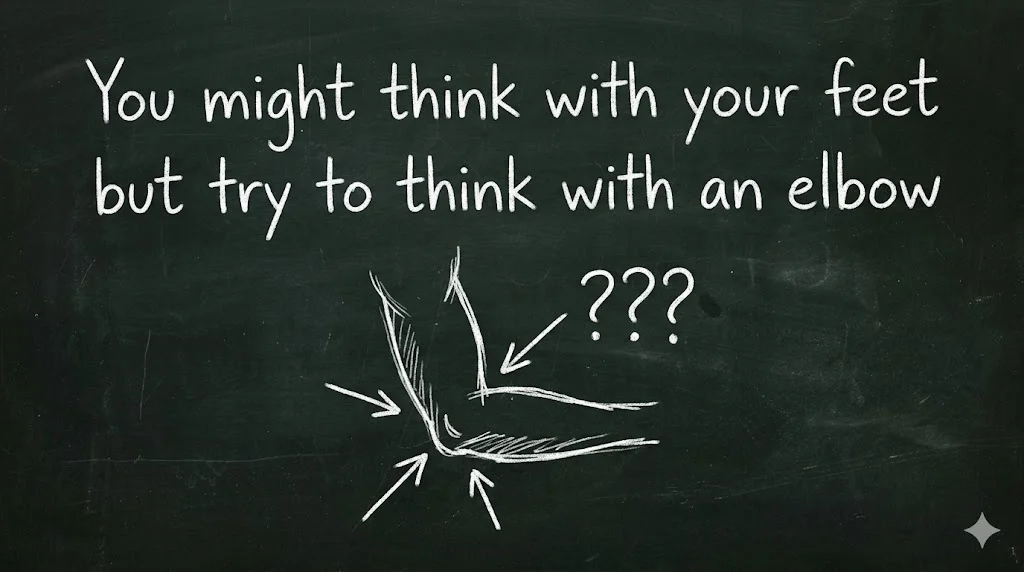
💆💭 Can you feel yourself thinking?
Touch and thought run on the same perceptual machinery, but you get two different felt assignments: the world on your hand, the operator in your head. You can’t even get close to thinking with an elbow. That asymmetry should unsettle you more than it does.
Human-Condition · Mental-Processes
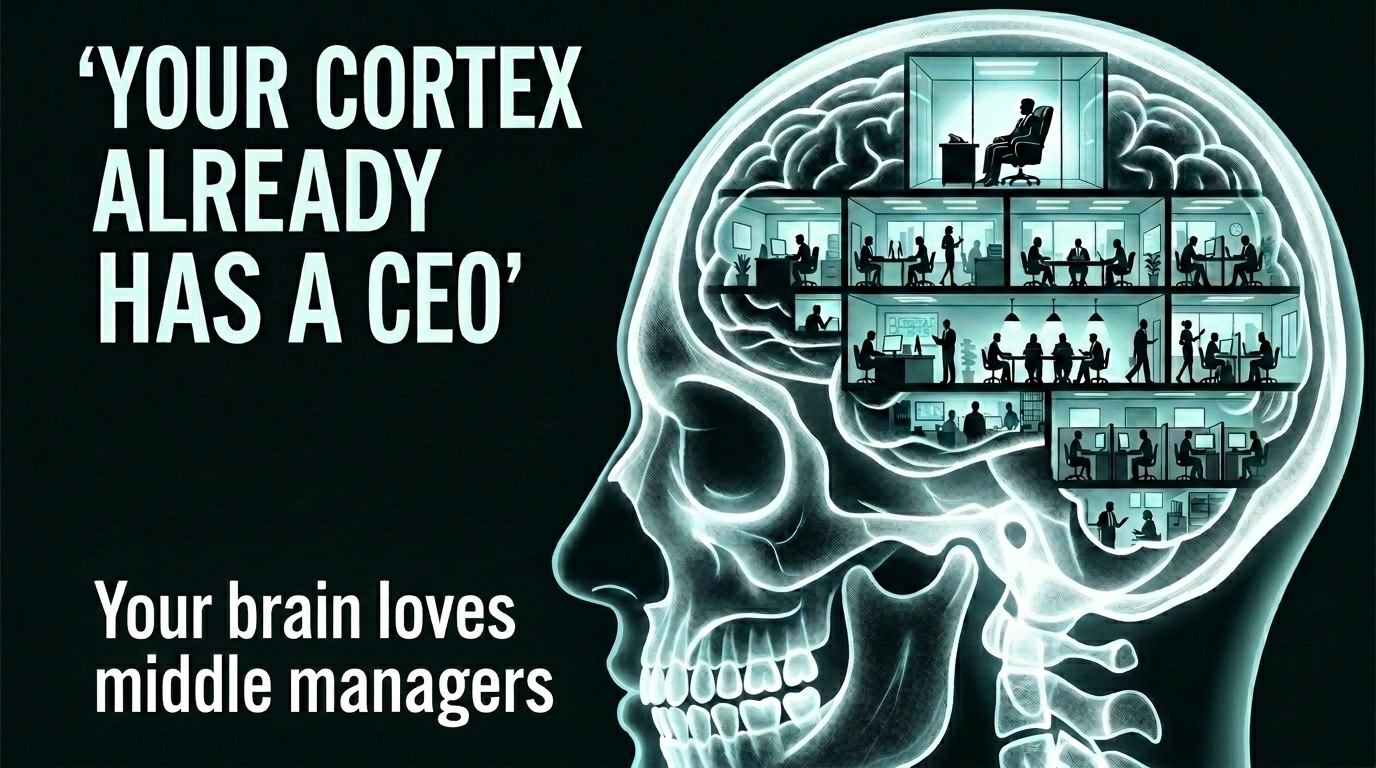
🏢🔺 Why does every group organize into a pyramid?
Brains compress the world into layers and rank, route attention upward, so local noise gets summarized before it reaches a decision. That is why pyramid-like groups feel obvious: a few signals at the top, many roles below, a ladder everyone can read. Hierarchy is an attractor, not destiny. Flatter systems need counter-design because the nervous system is already used to climbing.