Mental-Processes
How minds model choice, other minds, and right and wrong: attention, control, development, and the stories we tell about agency.
Overlaps with social life, but the spine here is thinking and development, not etiquette or institutions.
Human-Condition · Mental-Processes
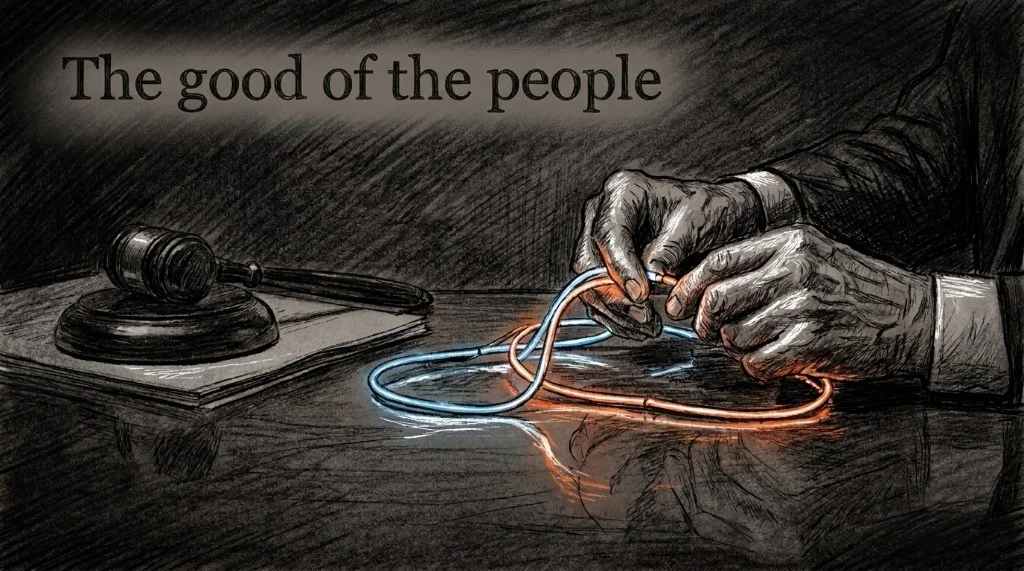
😇 Good guys make the rules
After you prove you are one of the good guys, the next shortcut gets cheaper if you can rename it and still call yourself fair. You can even invent that proof right before you need it. The rules stay loud for everyone else.
Human-Condition · Mental-Processes
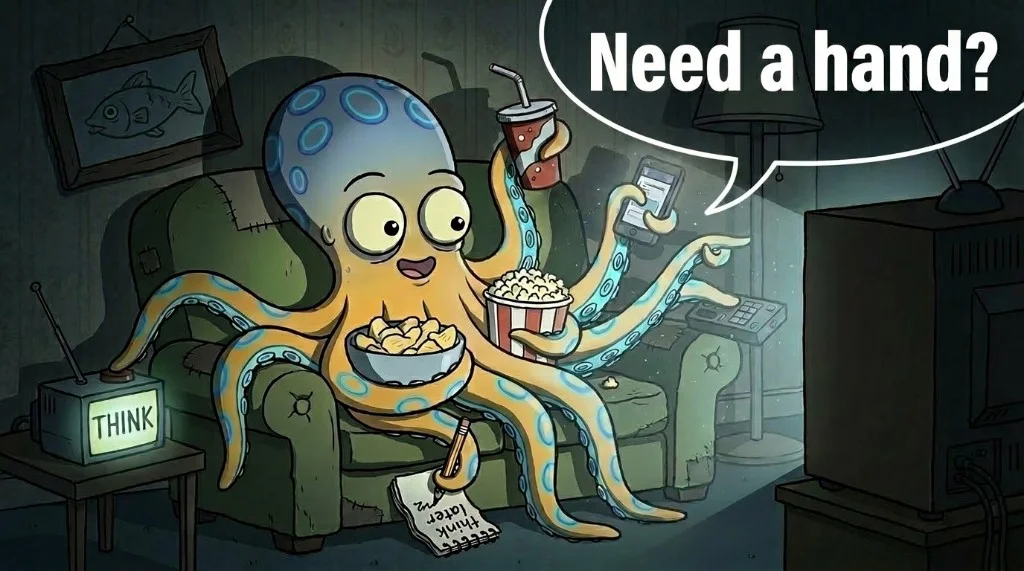
🦑🧠 You think you think?
When tools draft, sort, and summarize for you, they mostly eat the habit plane: inherited conclusions, reactive loops, cognition that runs like muscle memory. What stays yours is the metacognition plane: noticing which parts you outsourced, and learning to think ahead of your thoughts.
Human-Condition · Mental-Processes
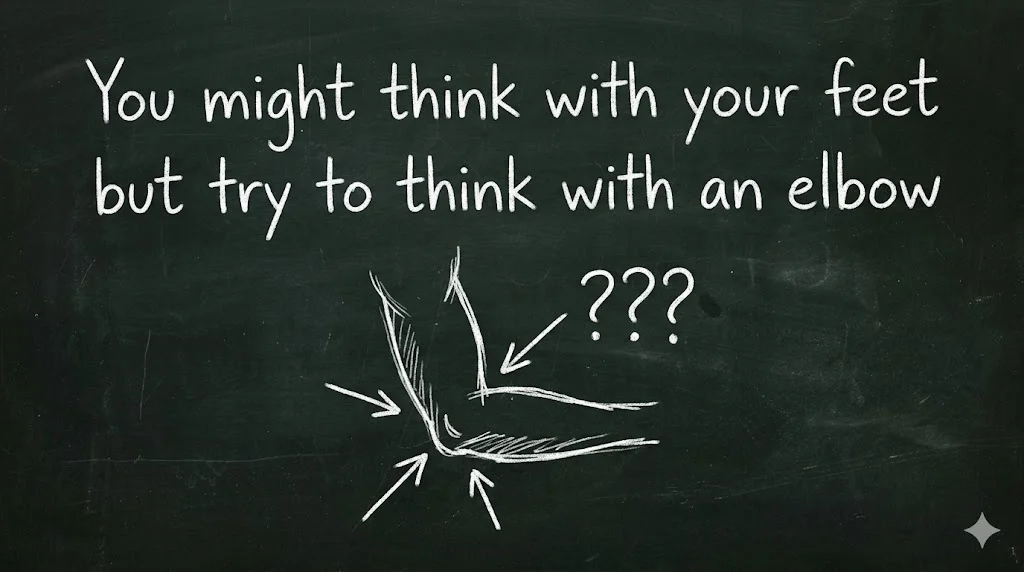
💆💭 Can you feel yourself thinking?
Touch and thought run on the same perceptual machinery, but you get two different felt assignments: the world on your hand, the operator in your head. You can’t even get close to thinking with an elbow. That asymmetry should unsettle you more than it does.
Human-Condition · Mental-Processes
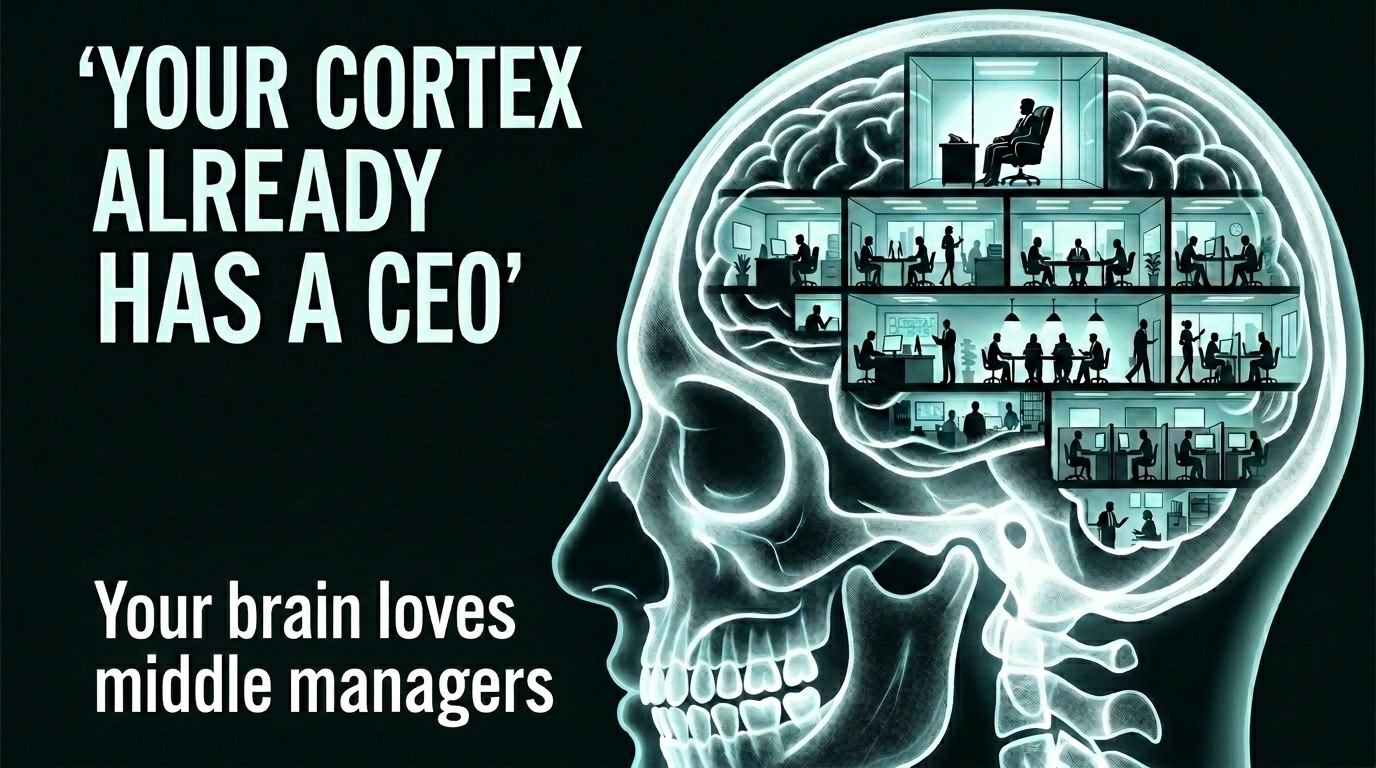
🏢🔺 Why does every group organize into a pyramid?
Brains compress the world into layers and rank, route attention upward, so local noise gets summarized before it reaches a decision. That is why pyramid-like groups feel obvious: a few signals at the top, many roles below, a ladder everyone can read. Hierarchy is an attractor, not destiny. Flatter systems need counter-design because the nervous system is already used to climbing.
Human-Condition · Mental-Processes
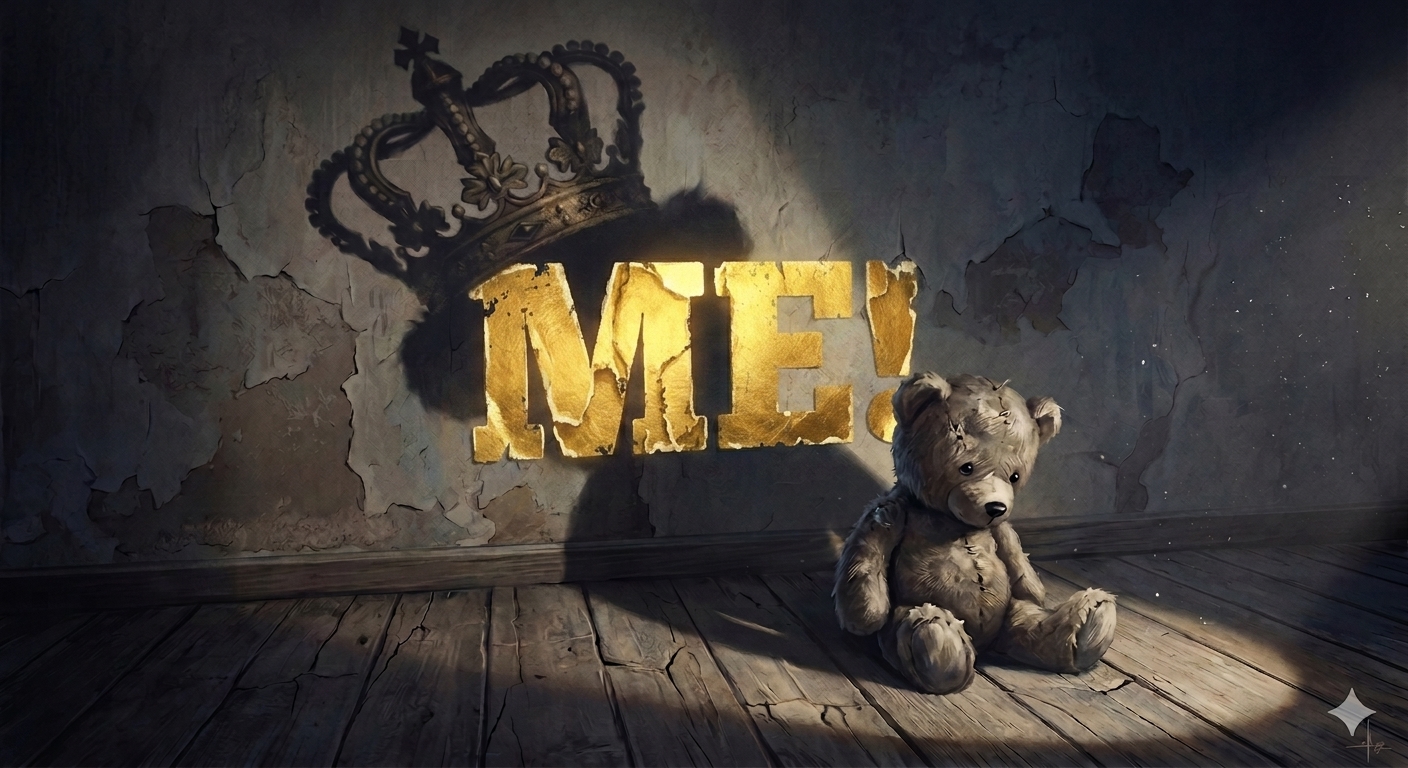
🎮🧸 Your ego is a game where you are the toy
Your ego runs like a game engine your brain keeps active in the background. The pain feels real because it borrows the same circuits as physical injury, but the game itself is a simulation. If you want to evolve, recognize it is not real.
Human-Condition · Mental-Processes
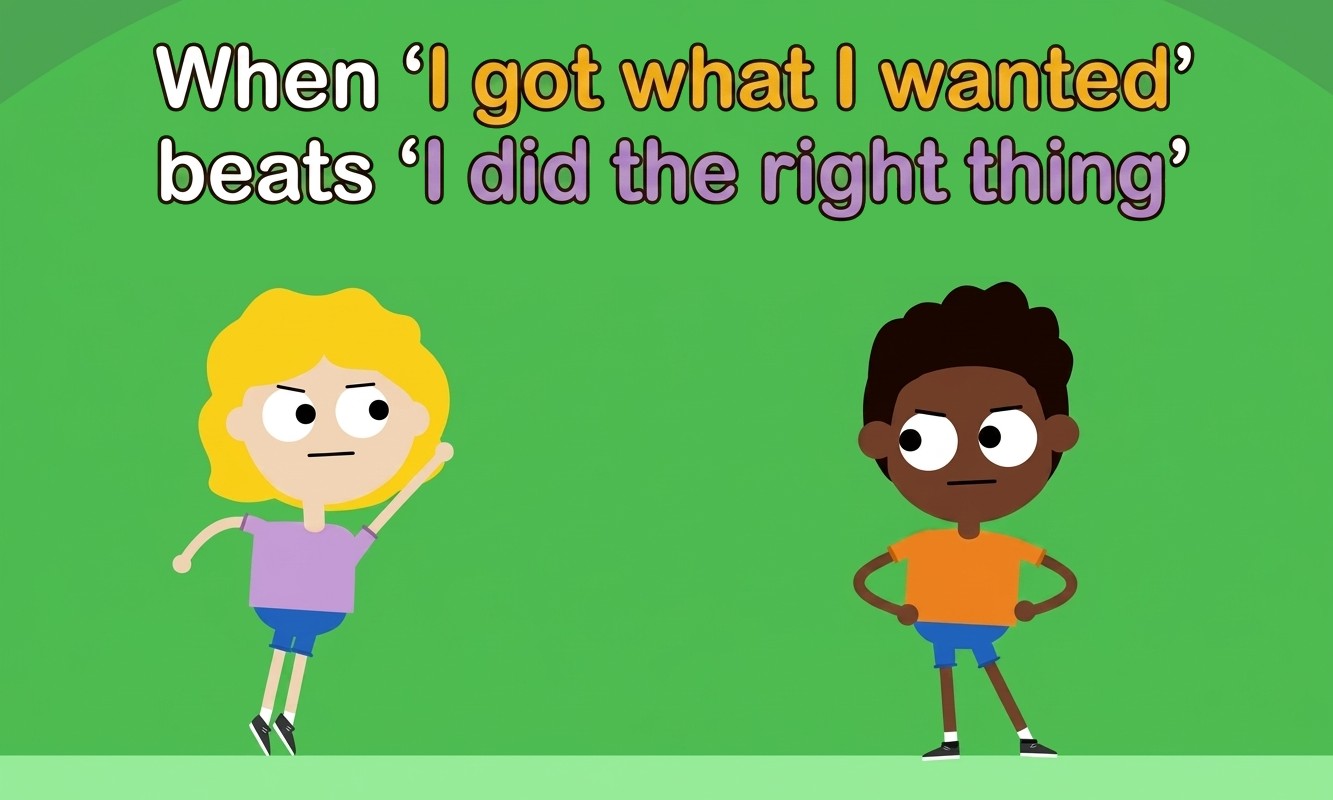
🫂🧱 Empathy is a stack of feeling, perspective, and judgment, and systems can aim it
Empathy is not one switch. It is a stack: feeling with someone, seeing their view, and (later) judging actions against an inner sense of right and wrong. Most of that stack is learned as brains and norms mature; systems can aim it without erasing it.

Human-Condition · Mental-Processes
🔥🎯 When stakes run high, choice stops feeling free
We say we love choice, but past a point it turns on us. When stakes rise, we stop chasing the best choice and start chasing relief from anxiety.