All Reptilocracy - behaviorengineering.ai

All Reptilocracy

How ideas spread and take over.

Memes, frames, and narratives that jump between minds and compete for attention and control.

TLDR

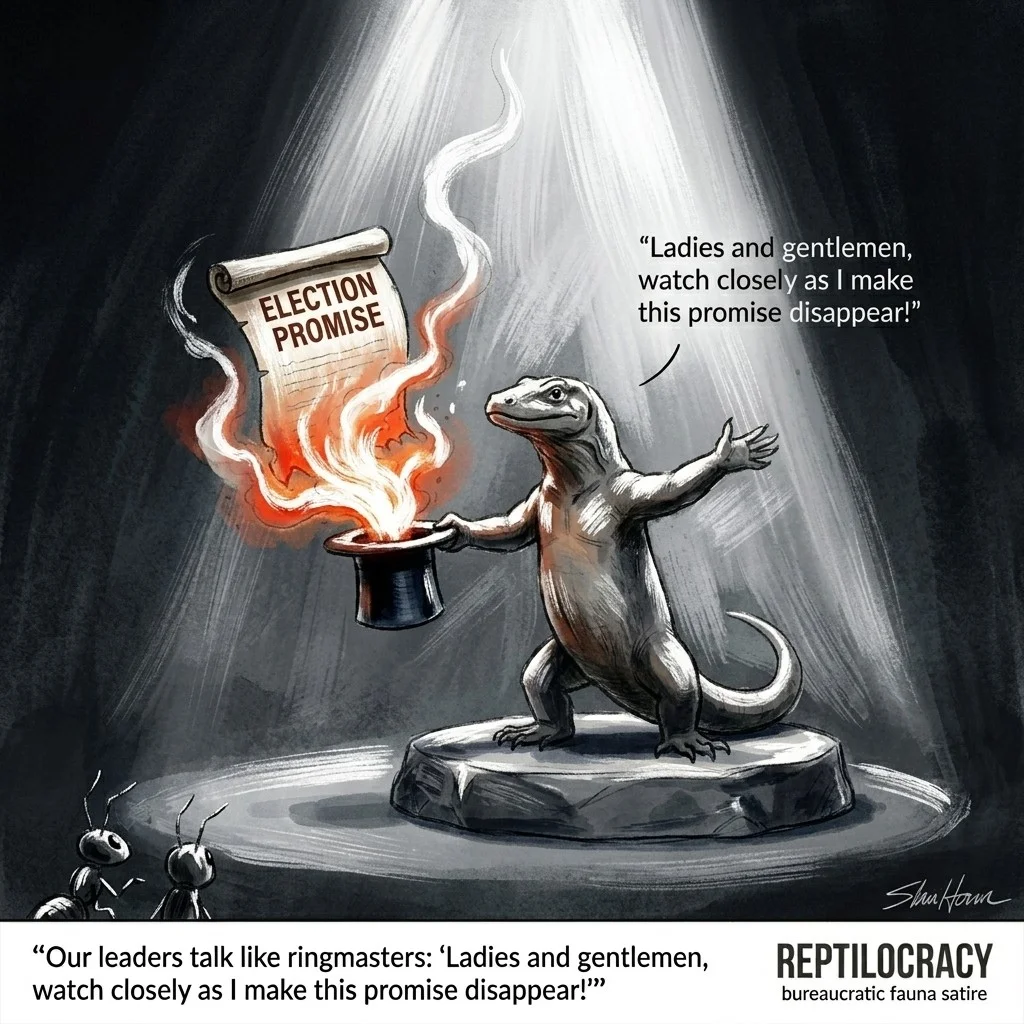
We watch the campaign promise go into the hat and never come back out. The trick isn’t hiding the lie, it’s making us feel silly for expecting follow-through.

Context

This scene shows narrative control wrapped in performance incentives: leaders gain status by making bold promises and then skillfully redefining, delaying, or “forgetting” them once in office. The audience attention span, media cycles, and fragmented responsibility make it safe to treat pledges as props rather than commitments.

Breaking the spirit of a promise becomes normal as long as you can defend the wording, blame events, or point to a partial gesture. “In politics, promises expire faster than the applause they earn.” Without psychological fitness filters for honesty, accountability, and the ability to face short-term pain to keep long-term commitments, systems promote performers who manage perception instead of stewards who honor their word.

TLDR

We say every war is bad, then carve out an exception the moment our friends start one. The rule stays on the wall while the story around it gets rewritten.

Context

Our brains judge the same action differently depending on who does it. Leaders frame “our” wars as necessary, defensive, or uniquely moral, while describing others as reckless or evil.

Social incentives reward loyalty to the in-group story, so repeating the double standard feels virtuous rather than dishonest. “Principles are firm until they touch our friends.” Without psychological fitness filters for honesty, courage, and resistance to status-driven self-deception, systems promote people who bend reality to protect the tribe instead of holding one standard for everyone.

TLDR

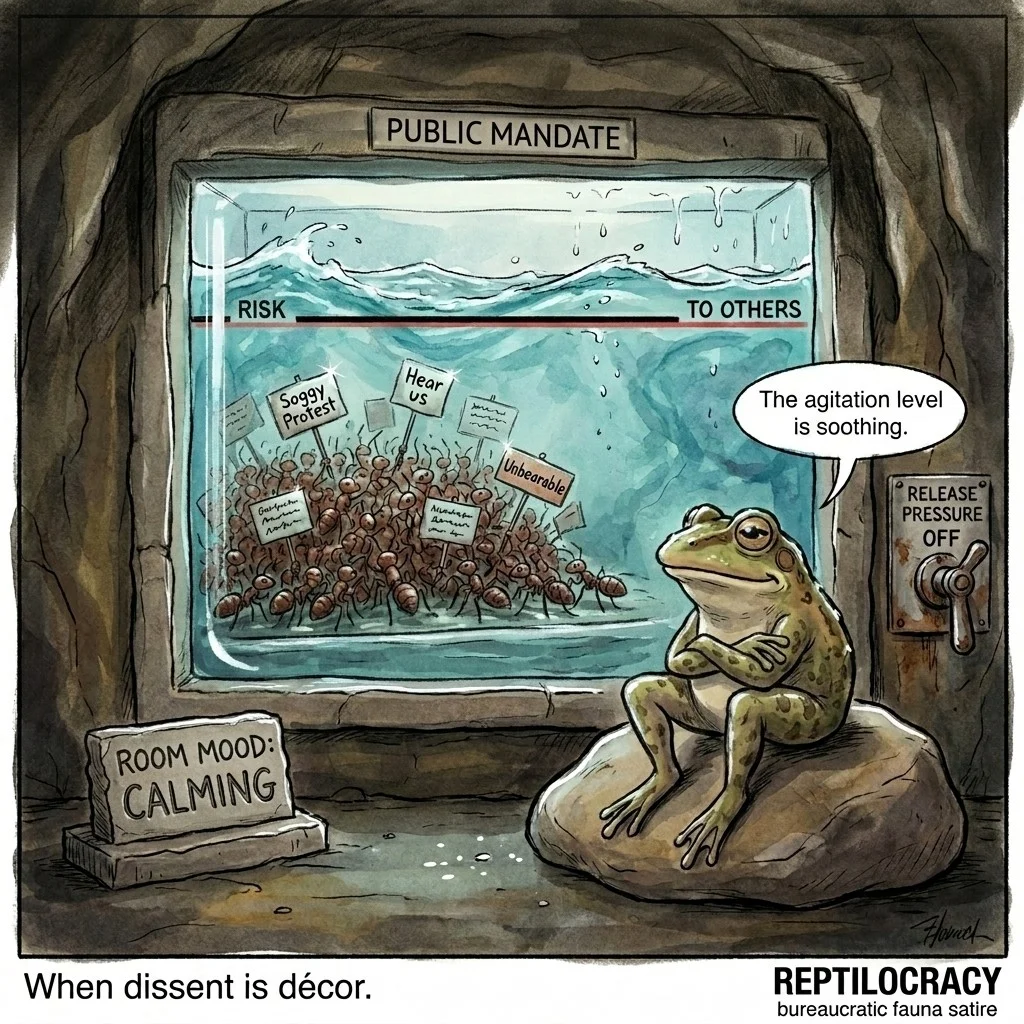
The public speaks, and the system logs it as input to interpret. Signals become dashboards, not instructions.

Context

This is narrative control: public signals like votes, polls, and protests get translated through dashboards, models, and internal framing. The mandate becomes flexible input, something to “interpret responsibly” rather than follow directly.

Incentives reward maintaining approval curves and avoiding sharp disruptions, so reinterpretation feels prudent and professional. The room optimises the story, not the signal. “When the mandate is a graph, it can be redrawn.” Without filters for honesty, accountability, and reality-contact, systems elevate people who reshape meaning instead of executing intent.

TLDR

We ask who caused it, and the room points to a diagram. Responsibility dissolves into systems that no one owns and everyone defends.

Context

This is diluted ownership across time and structure; decisions accumulate through many hands until no single person feels accountable. Committees, legacy systems, and inherited procedures make each step seem reasonable, so the outcome feels like “just how the process works.”

System abstraction reinforces it: we describe failure in abstract system terms instead of concrete decisions. This protects status and reduces personal risk, so it feels professional. “If the system did it, no one did.” Without filters for honesty and accountability, systems promote people who explain outcomes without owning them.

TLDR

Everyone tracks the mood above them, so truth gets filtered at every layer. The system says “report risk,” but rewards “don’t trigger fear.”

Context

This is a fear chain: each layer feels more danger from upsetting superiors than from the actual problem. Incentives like promotions, reviews, and blame exposure push people to soften bad news, delay escalation, or reroute it sideways.

Narrative control emerges inside the organisation: signals get translated into safer language before they move upward. This feels professional because it protects relationships and status. “Bad news shrinks as it climbs.” Without filters for honesty, courage, and reality-contact, systems select people who manage perception instead of confronting risk early.

TLDR

The room quietly agrees that damage only counts if it lands before the next election cycle. What kind of nervous system treats tomorrow’s cost as someone else’s job, and still calls that leadership?

Context

This scene shows future blindness in action: we treat future harm as less real than present discomfort. Election cycles, quarterly targets, and media pressure reward short-term wins, so pushing costs forward feels practical, even responsible.

Responsibility spreads across time and roles, so no one feels fully accountable for long-term damage. “We inherit the future from no one, so we spend it freely.” Systems without basic psychological filters keep promoting people who stay calm by exporting risk instead of carrying it.