W16Street-Wisdom 💬🇻🇪 Ni lava, ni presta la batea.
Contents
Teaser
Ni lava, ni presta la batea skewers the lazy obstructive type: won’t wash, hoards the tub, and still blocks collective work; the sting is active blockage, not just idleness.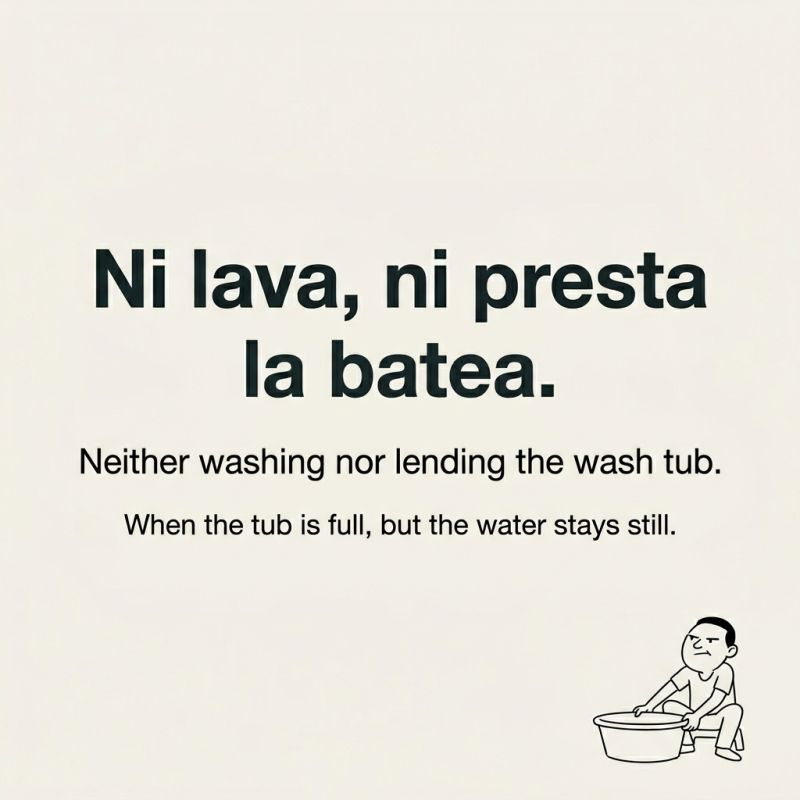
TLDR
You know that person who won’t do their own laundry, then hides the wash tub so you can’t do yours? This saying describes them perfectly. It’s for people who refuse to lift a finger, then actively block everyone else’s progress by hoarding tools or resources. You use it when someone’s both lazy and obstructive, creating obstacles while doing nothing themselves. It’s like calling them a dog in the manger.Context
Venezuela values collective effort and shared responsibility. This expression captures deep frustration with uncooperative, obstructive individuals. People use it with a critical, exasperated tone. You might hear it about a colleague hoarding shared equipment, stopping others from progressing, or a family member hiding cleaning supplies to avoid chores.Going deeper
In English
Closest English equivalents include:
- They won’t lift a finger and act like a dog in the manger.
- They don’t help and they get in the way.
- They’re useless and obstructive.
Laundry and obstruction
The saying uses the everyday act of laundry to make its point. Not doing your own washing is clear laziness. The batea, or wash tub, is a common, essential tool for this chore. Withholding it is not just passive inaction; it is an active block, stopping others from doing what you will not.
This imagery resonates deeply in cultures that value collective effort and shared responsibility. The frustration is not just about someone being idle. It is about their active obstruction, hindering group progress and creating unnecessary burdens for everyone else.