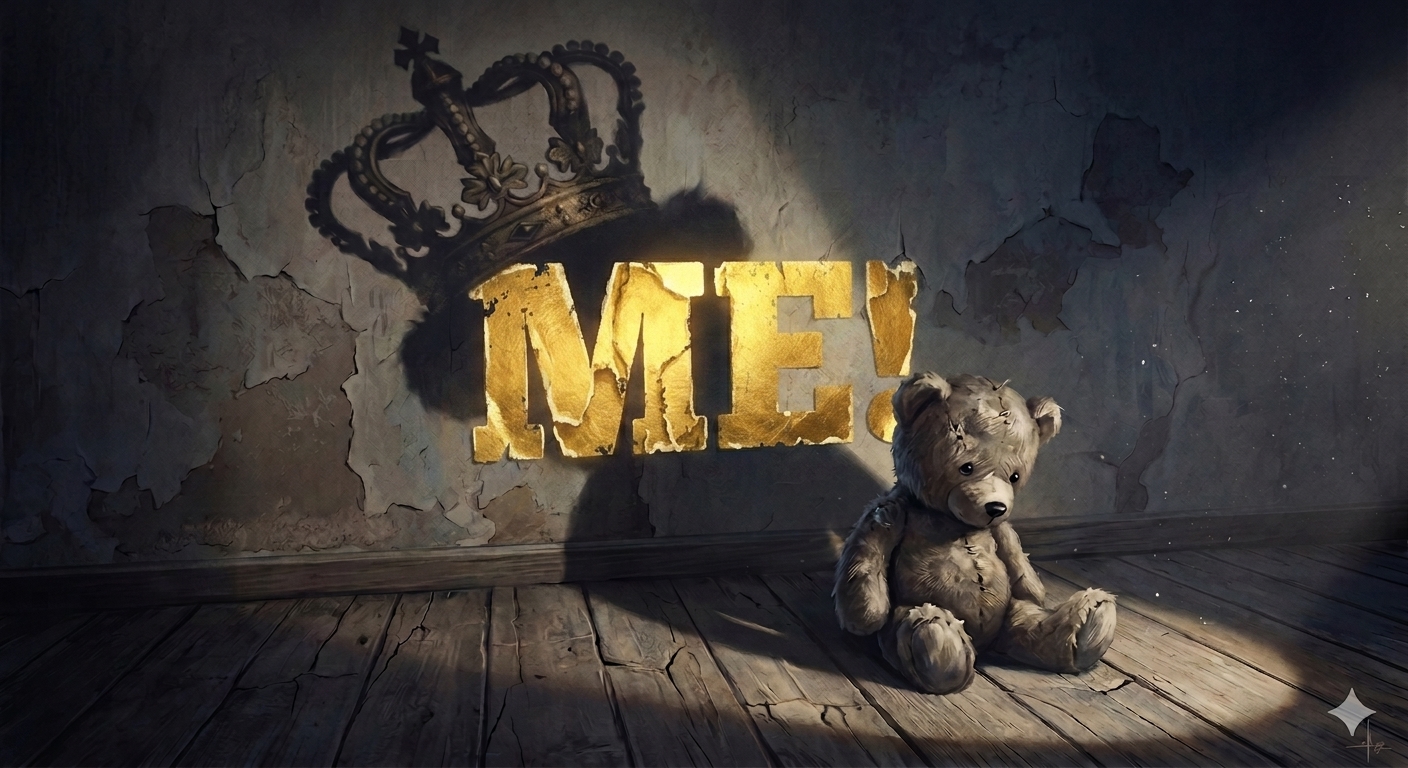
🎮🧸 Your ego is a game where you are the toy
Claim
Your ego runs like a game engine your brain keeps active in the background. The pain feels real because it borrows the same circuits as physical injury, but the game itself is a simulation. If you want to evolve, recognize it is not real.Thoughts
We talk about ego like it is a personality trait. But it is more like a simulation running in the background.
In this simulation:
- You are the main character.
- The rules were installed by your family, culture, and past experiences.
- The rewards and punishments exist mostly in your head.
- And yet your nervous system reacts as if every round is life or death.
The game mechanics
- Your brain builds an internal avatar: “me”.
- It tracks a score: approval, status, being right, being admired, being in control.
- It predicts moves: “If I say this, post that, achieve this… my score will go up or down.”
- It uses real emotional circuitry (pain, shame, pride, anxiety) to enforce the rules.
When you “lose” in this game, get criticised, ignored, rejected, proven wrong, it hurts. Your brain uses some of the same systems involved in physical pain to flag social loss and ego threat.
The game is virtual. The emotion is not.
Why the game plays you
The ego-game pretends to protect your survival, but most of the time it is actually guarding a story about who you must be. It defends a fragile image you are trying to project and enforces old rules you never consciously chose.
So you argue long after you stopped caring, just to avoid “losing”. You chase admiration from people you do not even respect. You feel like you are dying when your job title, follower count, or reputation takes a hit, even though your actual life is not at risk.
The game says: “You must win, or you are nothing.” And that is how it plays you.
The algorithm glitch: the rules are not real
This is the lie the ego hides from you:
- The scoreboard is invented.
- The win conditions are configurable.
- The “regret” and “failure” categories were mostly downloaded from other people.
You built this game from childhood approval patterns, cultural hero myths, and your group’s idea of what “success” looks like. Not from first principles.
Yet your body reacts as if those rules were laws of physics.
The awakening
Remember John Nash in A Beautiful Mind. He saw ghosts his whole life, but finally noticed the little girl never grew old. He could not make them disappear. He just learned to let them stand there without obeying their orders.
You must do the same. Try not answering. The game will keep running, but it will run without you, and it will stop giving you orders.