😇 Good guys make the rules
Claim
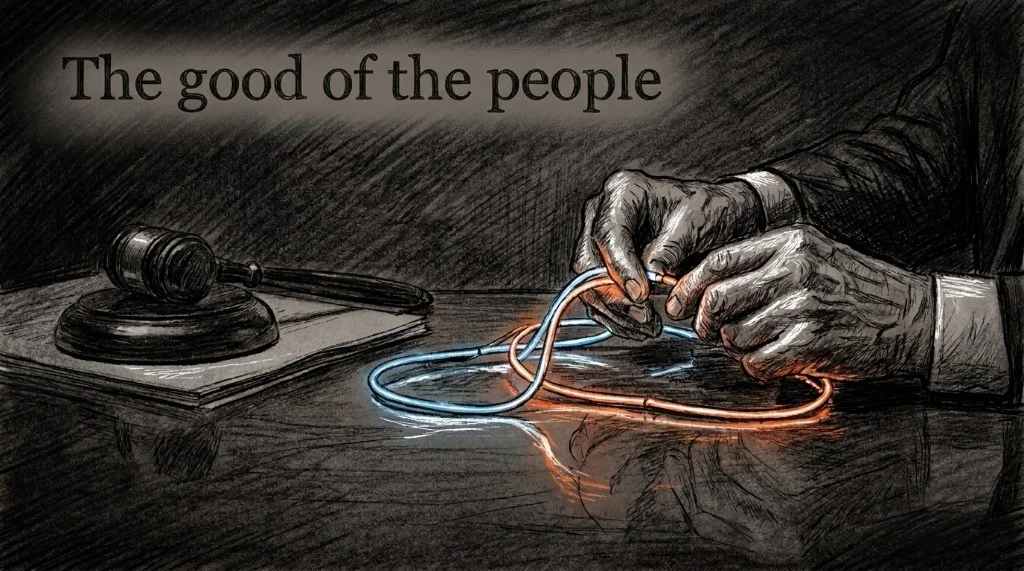
After you prove you are one of the good guys, the next shortcut gets cheaper if you can rename it and still call yourself fair. You can even invent that proof right before you need it. The rules stay loud for everyone else.Thoughts
We can cheat, because we are the good guys.
Look fair. Then cheat.
In Monin and Miller’s studies, people first rejected a blatantly sexist statement, then chose a man over a woman for a job labeled male. Looking fair on the first screen made the biased hire on the next one easier to live with.
Brown’s team ran a simpler version. People rated how generous they would be on soft charity dilemmas, such as donating an inheritance. Then they faced a math screen that showed the answer unless they hit a key in time. People who had just rated their own virtue “forgot” that key more often than people who rated an acquaintance. Researchers call that pattern moral credentialing.
Rename the cheat so it still fits
After the virtue proof, your head starts rewriting the next move.
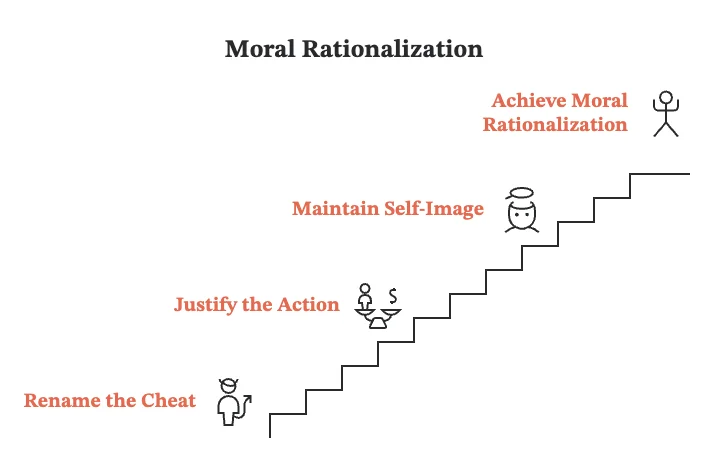
You tell yourself: “I’ve already proved I’m fair, so this one small tilt is fine.” Or: “I’m generous, so taking this win still leaves me a good person.” The cheat becomes fair compensation. Prejudice becomes fit. A grab for yourself becomes being practical. That is moral rationalization: you rename the move until it matches the self-image you refuse to drop.
Build the halo on the way in
You do not always need a real good deed from last week. Right before you bend the rule, you invent one: “I’ve always supported women,” or “everyone knows I’m honest.” You can also borrow the group’s badge: we are the defenders of X, so our rough tactics are justified.
When the license shrinks
Brown’s team also showed when the badge stops paying. With one second to hide the answer, “I was too slow” still worked as an excuse, and people cheated more. With ten seconds, the same miss looked deliberate, and the earlier virtue rating barely moved them.
People also pull back when the act would force them to admit “I am a cheater,” or when watchers make reputation costly. Separate from that, fear of a last chance can shove the same cheat through: you use the halo to quiet guilt while you grab before the window closes.
Rules for the rest
We write the rulebook, then we write the fine print only we get to read. Organizations help by splitting one dirty decision across many hands, and by calling the cheat creative accounting, flexible policy, or “enhanced” procedure.
Our game is your game, but not ours. Thick rulebook for you. Blank for us.