All Mind-Infrastructure - behaviorengineering.ai

All Mind-Infrastructure

How tools and systems reshape how we think.

AI models, platforms, metrics, and habits that train, outsource, or dull human intelligence.

Claim

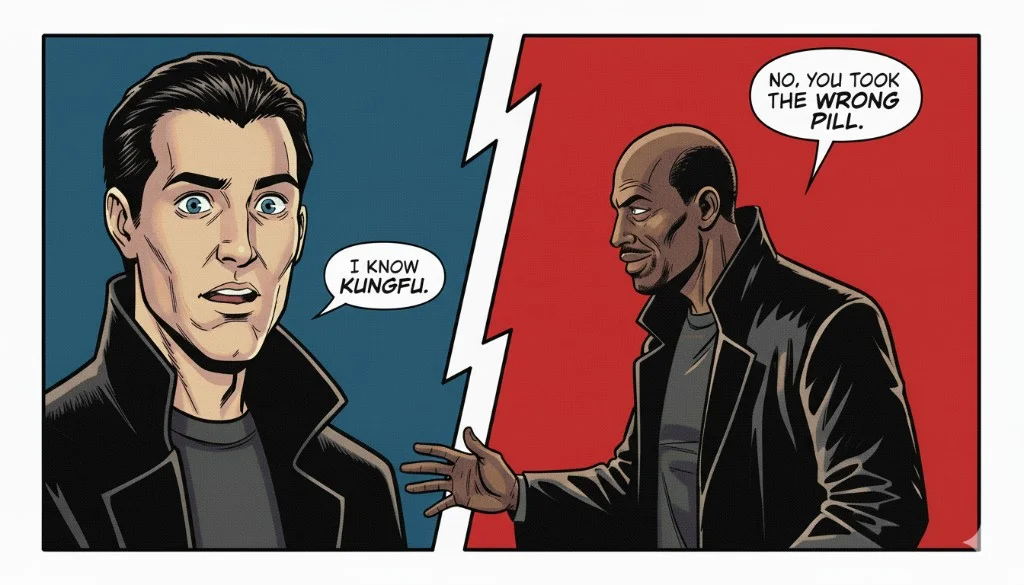
After a classic psychedelic dose, the brain may enter a brief neuroplasticity window where recent material encodes more strongly while updating when rules change gets harder. One way to read that mix is a short-lived overfitting bias; that offers a speculative explanation for stories of effortless memorization, not proof they happened.

Grounding

Classic psychedelics can open a neuroplasticity window that outlasts the acute trip. A low-dose LSD study (50 ฮผg, tested 24 h later) found better episodic memory and verbal fluency but worse cognitive flexibility when rules changed. Sources: Towards an understanding of psychedelic-induced neuroplasticity ; LSD, afterglow and hangover: Increased episodic memory and verbal fluency, decreased cognitive flexibility

What you probably do not know yet

  • You simplify to think; the trap is when you forget the cut and treat it as law.
  • People pass on brain metaphors in short form (computer, prediction machine). Repeat the comparison and like turns into is: one small slice gets sold as the whole mind.
  • “How does the brain work?” The answer depends on what you need it for: a mechanism, reassurance, or a fundable story.

What you will know after

When a simplification helps, don’t turn it into absolute truth. Don’t let the fad (AI, prediction machine) decide how you talk about the brain. If that metaphor already hooked you, read Your brain is a controlled hallucination first.

What you probably do not know yet

  • Spatial cognition uses roughly half the brain and evolved long before language.
  • Gestures typically precede words. Block the gesture, and the thought gets harder to form.
  • The body actively helps build the thought.

What you will know after

This talk reframes thinking as a spatial, bodily process. Most language rides on top of this physical foundation. See where the model fits, where it strains, and how to use gesture and movement as actual cognitive tools.

Claim

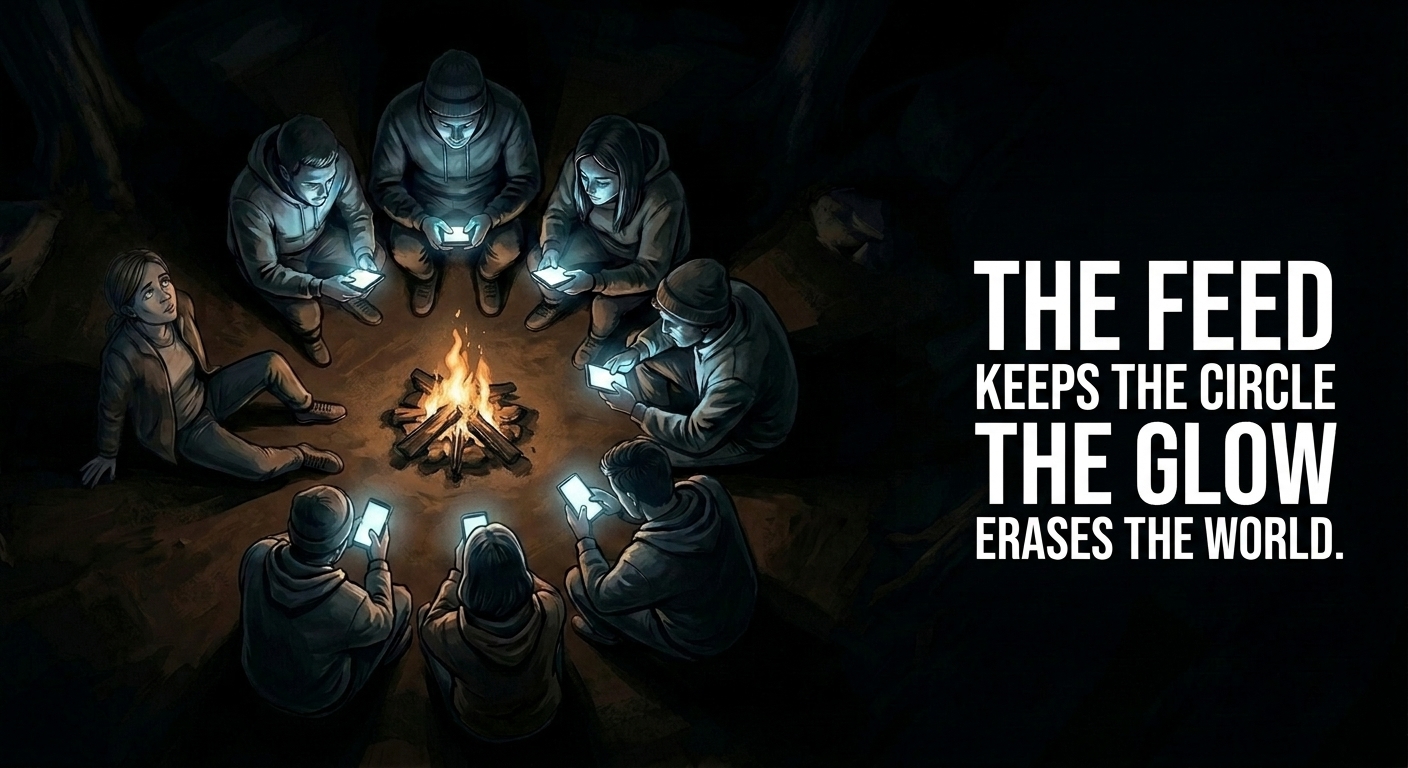
Algorithms rebuild the ancient village in your pocket to keep you circling. They use identity, cohesion, and topic alignment to trap you in a digital campfire that rewards staying in sync over getting wiser.

Grounding

Group sustainability is measurable via social identity (shared region, role, or behavior class) and social cohesion (graph density and average shortest path) to predict which Twitter groups stay aligned across real-world events. The paper tests two competing theories: groups form through shared identity categories or through dense mutual ties. It finds both matter. Topic divergence (KL distance from group topic averages) tracks how discussion stays aligned over time. Sustainability here means “discussion stays aligned and the group persists,” not “beliefs become more accurate.” The metrics omit truth, breadth, or cross-group learning. Source: Social Identity and Cohesion in Online Communities (PDF).

What you probably do not know yet

  • Your brain is a prediction machine instead of a passive camera. It builds a best-guess model of the world and verifies it against sensory data.
  • “Reality” is the brain’s strongest guess, optimized to minimize prediction errors instead of showing objective truth.
  • Optical illusions are strong priors in action. They generate hallucinations whenever sensory data is noisy, ambiguous, or novel.
  • The Free Energy Principle explains this as one continuous loop: predict, compare, update, and repeat.

What you will know after

This video will provide you with a clean intuition on how the latest neuroscience theories explain the algorithm of the brain without turning it into a math lecture. Don’t worry, it can still get spooky without the maths. We will go deeper on the neuron-level mechanics in a follow-up video.

What you probably do not know yet

  • Someone using AI well can outrun you on the same scoreboard, even if the AI itself doesn’t replace you.
  • The shift is a steady move of routine cognitive execution into software, pushing humans up toward judgment or out if that is all they sold.
  • The spell-check analogy: tools that remove mechanical friction reset what “skilled” means and move the competitive bar.

What you will know after

AI rewards those who name ambiguous problems and own trade-offs, while penalizing those who only execute fixed workflows. Use your evolutionary advantage: humans were built to explore and be curious.

What you probably do not know yet

  • When a rat pauses at a maze junction, its brain cells fire in a sequence matching the paths it could take, simulating the future before it moves.
  • Animals can experience regret. When they make a bad choice, their brain replays the better option they walked away from to update their future strategy.
  • Chimps play complex mind games, like pretending not to see hidden food so a rival will not steal it.
  • AI models can pass tests designed to measure human social awareness, even though they lack the brain circuits that actually understand other minds.

What you will know after

A clear picture of how the brain evolved from simple prediction to complex social simulation, and why today’s AI might score high on our tests while thinking nothing like us. Max Bennett connects neuroscience, animal behavior, and AI into one fascinating timeline.