😫🔄 Hard times, strong men, and feeds that reward noise over skill
Claim
Engagement-driven systems can speed up the weak-men phase of the Hopf cycle: they reward attention-seeking, self-promotion, and performative identity, so shallow performers rise ahead of competent people and systemic failure arrives sooner.Thoughts
The line
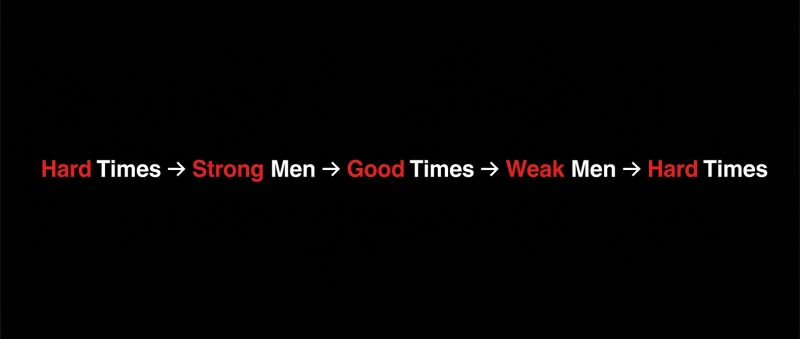
Hard times create strong men, strong men create good times, good times create weak men, and weak men create hard times.
Where it comes from
That line is from G. Michael Hopf’s 2016 post-apocalyptic novel Those Who Remain, not from ancient sources.
What it compresses
Hopf wrote it after reading generational-cycle theories like The Fourth Turning, which argue that societies move in roughly 80-year cycles of stability, decay, and crisis. His line compresses that model into four steps:
- Hard times produce capable people.
- Capable people build stable, prosperous systems.
- Prosperity allows narcissistic, incompetent actors to rise.
- Those actors preside over decay and trigger the next hard times.
The algorithmic angle
In the algorithmic age, you can see this last step play out in code: engagement-driven recommendation systems reward attention-seeking, self-promotion, outrage, and performative identity.
They turn influencer culture into a narcissism factory that elevates shallow performers over competent people, accelerating the slide toward systemic failure and renewed crisis.