All Social-Protocols

Protocols that keep groups aligned: norms, reputation, punishment, repair, and clarity.

Incentives, media, and everyday scripts that stabilize shared belief and coordination.

Claim

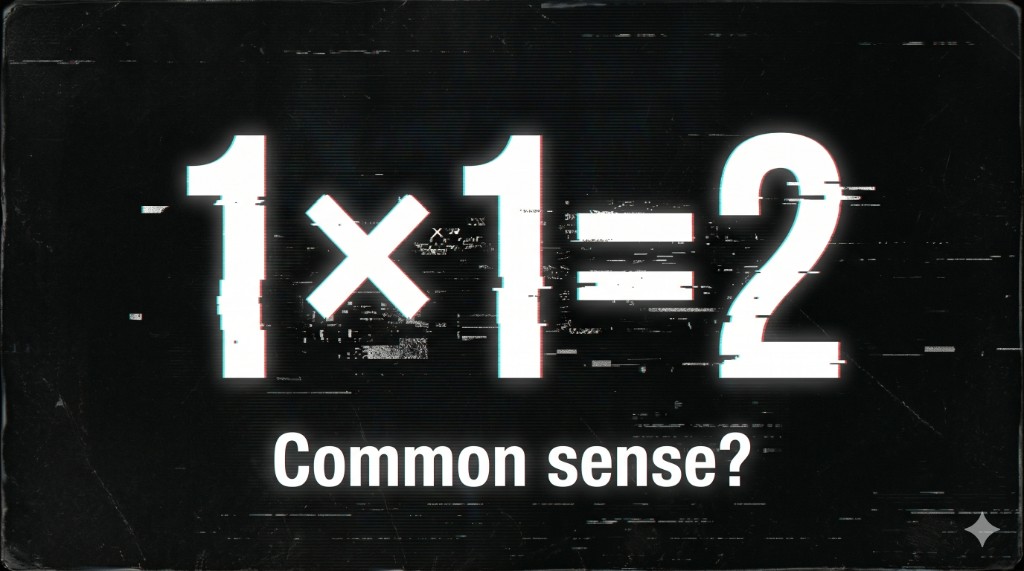
It feels “just obvious” because it’s been engineered into you.

Grounding

Whiting & Watts (PNAS 2024) treat common sense as agreement plus accurate belief that others agree (joint consensus you can see coming). At scale (2,046 raters, 4,407 claims), collective agreement beyond plain physical facts and school basics clusters in small groups on narrow slices of reality. Source: A framework for quantifying individual and collective common sense.

Claim

We only accept truth as a meme

… so it never hits the amygdala hard enough to fight for it.

The brain doesn’t care about “truth.” It cares about keeping its model of the world intact. Anything that threatens that model feels like danger.

So we downgrade truth into memes. We turn destabilising facts into jokes, clips, and hot takes. That makes them easy to look at and easy to ignore.

Grounding

Powers and LaBar (2018) propose a taxonomy of psychological distancing, a neurocognitive model of how distance regulates emotion, and a supporting meta-analysis.

Source: Regulating emotion through distancing (PMC)

Claim

Real communication isn’t just about words; it’s about shared context, practice, and experience. We only truly “sync” meanings with others when we share genuine time and experiences, not through superficial activities. Without this, even the same words can mean different things to different people.

Grounding

Shared reality is the sense that you and another person experience the world the same way, not only agreeing on facts, but feeling aligned on what is real and what matters. Epistemic companions are the close others you learn and think with; Rossignac-Milon & Higgins (2018) show how shared feelings, practices, and identity in those relationships build that alignment over time. Source: Epistemic companions: shared reality development in close relationships (PDF).

Claim

Memes are units of cultural transmission, Dawkins’s analogue to genes, that hop from brain to brain by imitation. They can harden into norms, identities, and shared fictions, recruit emotion and tribal defense, and behave like agents in how people protect or spread them.

Grounding

The word meme was introduced in Richard Dawkins’ The Selfish Gene (1976) as a replicator of culture; the Greek root mimema (“that which is imitated”) is folded into a rhyme with gene. Overview: Meme (Wikipedia).

Claim

Engagement-driven systems can speed up the weak-men phase of the Hopf cycle: they reward attention-seeking, self-promotion, and performative identity, so shallow performers rise ahead of competent people and systemic failure arrives sooner.

Grounding

The quoted line is from G. Michael Hopf’s novel Those Who Remain (2016); generational-cycle accounts such as Strauss and Howe’s The Fourth Turning (1993) describe long-wave shifts between stability and crisis. Source: The Fourth Turning (Wikipedia).