😫🔄 Hard times, strong men, and feeds that reward noise over skill
Claim
Engagement-driven feeds rank by clicks and watch time, rewarding attention-seeking and performative identity. That speeds up the weak-men phase of the Hopf cycle: shallow performers rise ahead of competent people, and institutions slide toward failure faster.Thoughts
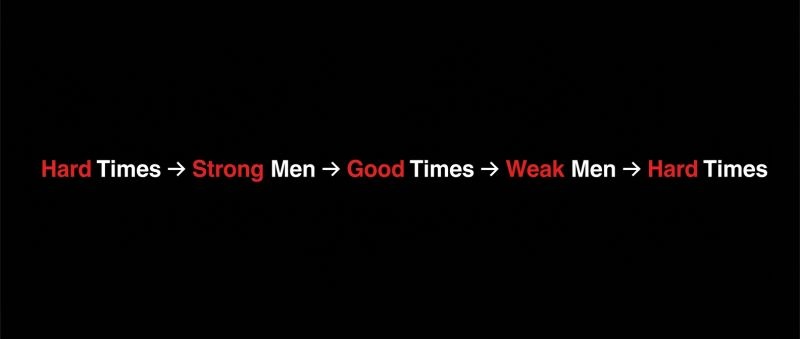
G. Michael Hopf wrote the line below in Those Who Remain (2016), after reading generational-cycle theories like Strauss and Howe’s The Fourth Turning. It is not an ancient proverb. It compresses their roughly 80-year model of stability, decay, and crisis into four beats:
Hard times create strong men, strong men create good times, good times create weak men, and weak men create hard times.
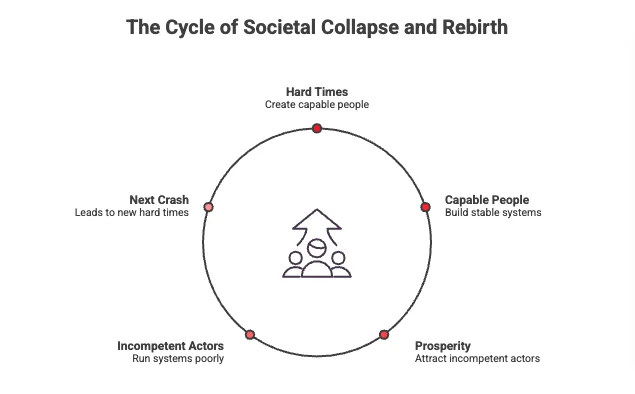
- Hard times produce capable people.
- Capable people build stable, prosperous systems.
- Prosperity lets narcissistic, incompetent actors rise; they run the system poorly and set up the next crash.
In the algorithmic age, outrage and self-promotion spike those signals, so the system boosts performers over builders and turns influencer culture into a narcissism factory.
You see it when loud creators outrank domain experts on search and recommendations, and decisions follow the loudest voice. That shortens the weak-men phase and pulls the next crisis closer.