🧮 Common sense is Engineered
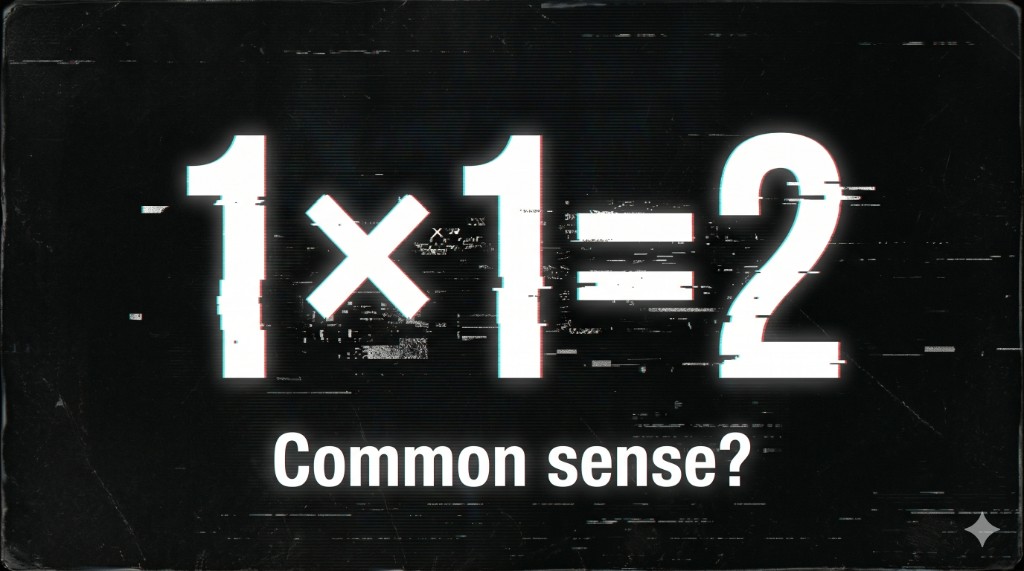
Claim
It feels “just obvious” because it’s been engineered into you.Thoughts
How the study defined common sense
A 2024 study asked 2,046 people to judge 4,407 statements and guess what “most people” would say about each one. For every statement, they calculated two things:
- How much people actually agree.
- How well people can predict that agreement.
On that definition, a statement only counts as “common sense” when most people agree and know that others agree. When they ran the numbers, they found that outside of basic physical facts, only small groups agree on small slices of reality. That kills the idea of a single shared instinct.
Why 2 + 2 looks universal
Most adults agree that 2 + 2 = 4, and know everyone else agrees. That is not natural. That is what happens when a system pushes the same math curriculum through millions of kids for a decade. The agreement is manufactured, then sold back to you as obvious.
We agree that 1 × 1 = 1 because we ran through the same school math. That is engineered common sense. When someone like Terrence Howard confidently insists 1 × 1 = 2, you are watching a different protocol run in his head. His obvious is simply not ours.
Where the feeling comes from
Training and repetition. School, media, work, and your social circle repeat some patterns and ignore others. Over time, those patterns harden into fast, automatic judgments. They stop feeling learned and start feeling like reality.
Local protocol: contact required
Common sense is not a global setting. It is a local protocol. It syncs best with people who share your training and your information bubble, but only if you actually interact with them.
When was the last time you had a good chat with your neighbours?