🎲🩸 Politics is a bloodless war game that ends in zero-sum
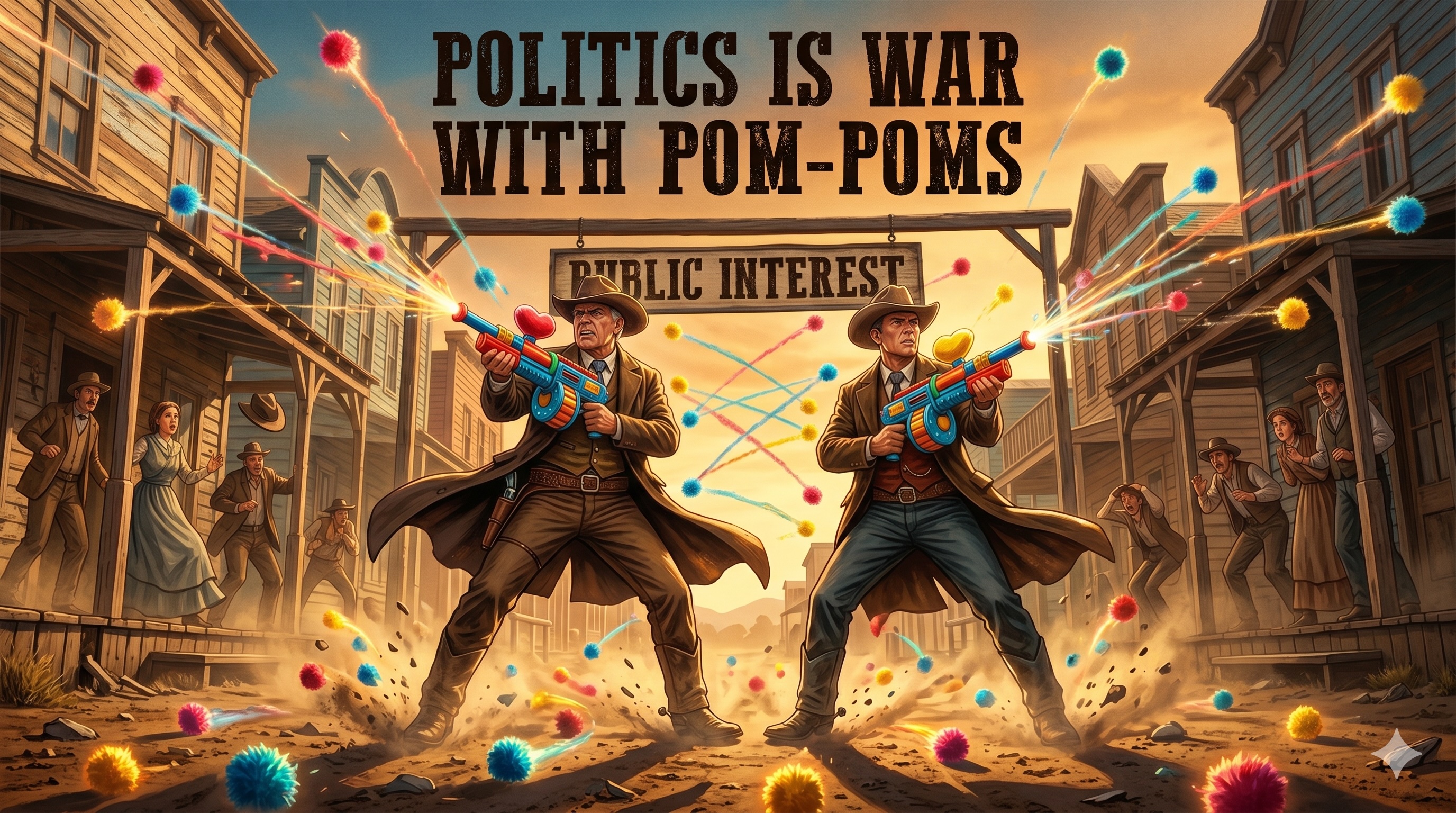
Claim
When people dodge candor to duck awkward confrontation, they do not erase the fight; they push it sideways. They still score the outcome like a zero-sum game: someone wins cover, someone eats the cost, and trust rots in the gaps.Thoughts
Where this started
I worked through a short tour of the iterated Prisoner’s Dilemma and Tit for Tat. These models show how repeated interaction rewards clarity and reciprocity. The pattern clicked immediately. I compressed that tour into a curated video page. I never used the model as proof; it just lit the social pattern for me.
Avoidance does not delete the fight
Politics (office politics too) trains people to keep faces intact. You soften feedback, bury tradeoffs, and route conflict through jokes, proxies, and timing. You feel kinder in the moment, but you are just delaying the bill.
This wastes time and burns money at a scale that still shocks me. Vagueness does not delete the winner/loser shape; it just hides the score. You end up with the same zero-sum outcome, plus a mountain of narrative debt and less chance for repair.
Hard times force collaboration because the outside pressure gives everyone the same scoreboard.
Respect, fear, and the boundary
Candor means you state your boundaries clearly and refuse to accept anything less. It is not about being “nice” or “mean”; it is about being legible.
Diplomacy only exists when people either respect you or fear you. We see both played at a wide scale, though the world leans heavily toward the latter. Without that foundation, “politeness” is just a slow way to lose. If you won’t name your stakes, people will fill the silence with suspicion and count your losses for you.
Think back to how you handled problems as a kid. You might get into a physical fight, shake hands, and then stay best friends for the rest of the afternoon. Adults trade that quick resolution for a long, polite war.