⚓ Neutrality is a risky ride
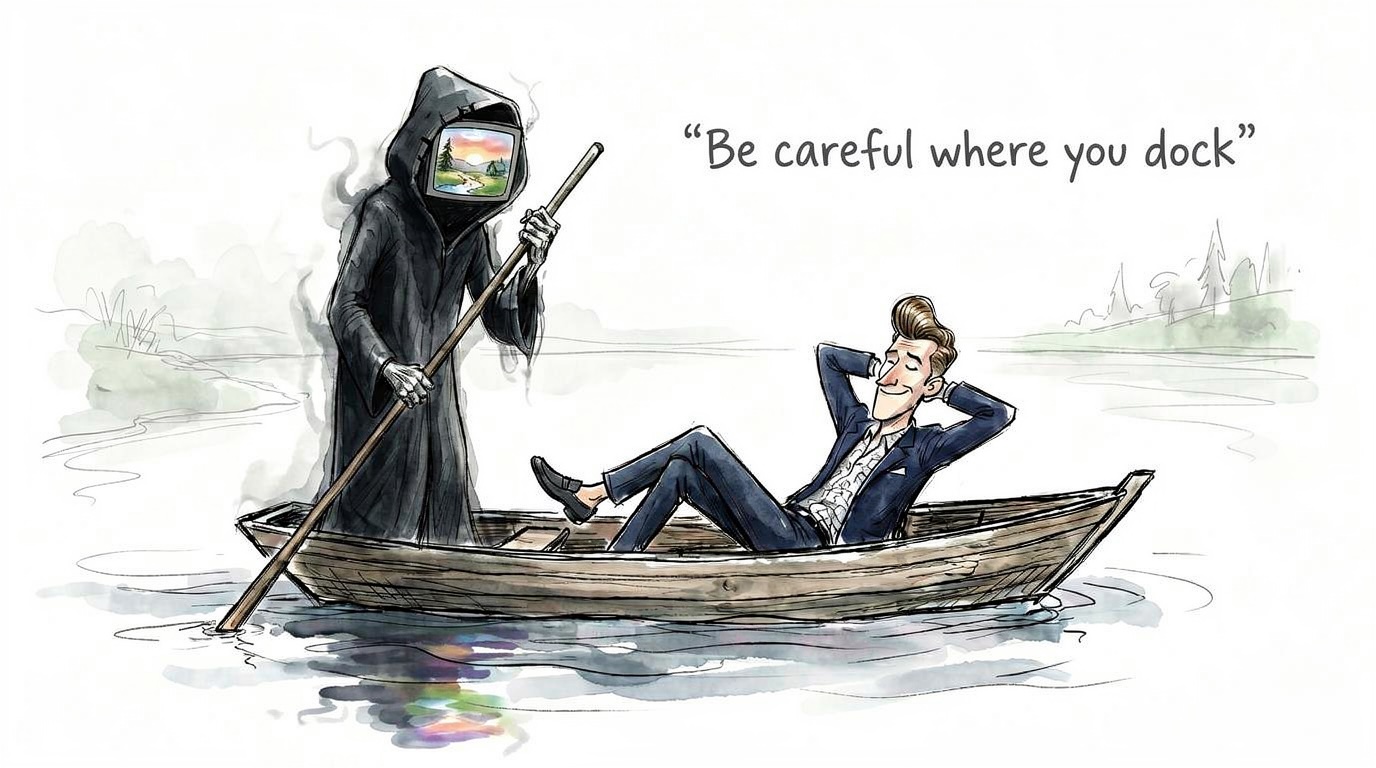
Claim
Unexamined neutrality under pressure turns into drift, and drift makes you easy to steer. Without a clear internal compass, you risk being nudged into whatever roles the system rewards: a silent bystander, an eager recruit, or a compliant enforcer.Thoughts
When you decide not to take a side, what actually happens to your agency?
Deliberate neutrality works when you’re actively investigating or following fair process. But neutral-by-default under pressure? That’s drift. And once you’re drifting, you’re easy to steer.
If you don’t take a stance, the system nudges you into roles it rewards. Depending on what the moment requires, you drift into becoming a silent bystander, eager recruit, or compliant enforcer. Risk spikes when things are unclear, time is tight, a boss is watching, or your identity feels on the line.
The capture pipeline
1. The Bystander “Not my problem. I will watch what others do first.” Ambiguity and the crowd set your course. When everyone waits for a signal, no one takes charge. Neutrality hands off your judgment.
2. The Recruit “These people make sense; they see the real pattern.” A desire for belonging and status shapes you. When your internal compass is weak or untested, you adopt the group’s script. You reframe harmful acts as simple loyalty.
3. The Enforcer “I am doing my duty.” Authority commands you. You shift into agent mode (agentic state): you act, but someone else “owns” the outcome, so you wash your hands of responsibility.
The line moves. First you watch. Then you cheer. Then you carry the clipboard or sign the form. At each step you feel more respectable, not more responsible.
Picture a workplace: a new policy rolls out with unclear harms. The team waits to see who speaks up. The manager signals support. Soon, compliance becomes the norm, and everyone enforces a rule they privately questioned.
The captain and vessel states
These are not personality types, they are modes you fall into. Under pressure, it is easier to slip into vessel mode because drifting saves energy and secures your place in the group. Captain mode needs friction. You build it like a muscle.
- The Captain state sets explicit non-negotiables, treats authority as input rather than command, and owns the outcomes. It relies on a calibration loop: “What would change my mind?”
- The Vessel state mirrors the crowd, lets roles define ethics (“if my job requires it, it must be ok”), and prioritizes belonging over doubt. It locks in early without testing assumptions.
Goal: make grounded decisions. Blind opposition is just another form of being steered.
Systems design for vessels
Systems need ordinary people. They set the stage so you act like a vessel:
- Ambiguity: Make harm hard to see directly, so people rely on official interpretation.
- Hierarchy: Use symbols and titles to convey legitimate authority.
- Escalation: Introduce harm gradually so refusal feels irrational or disloyal.
The system works if you never ask where the cargo is going.
Behind the curtain
Bystanders outsource moral judgment to the crowd. Recruits outsource it to the tribe. Enforcers outsource it to authority. Captains do not outsource it at all.
Before you lock into a stance or comply with a routine directive, hit the brakes and check your compass:
- What outcome am I actually building with my actions?
- What evidence would change my mind?
Where did you outsource judgment today?