🚦 Developed countries score the machine, not your life
Claim
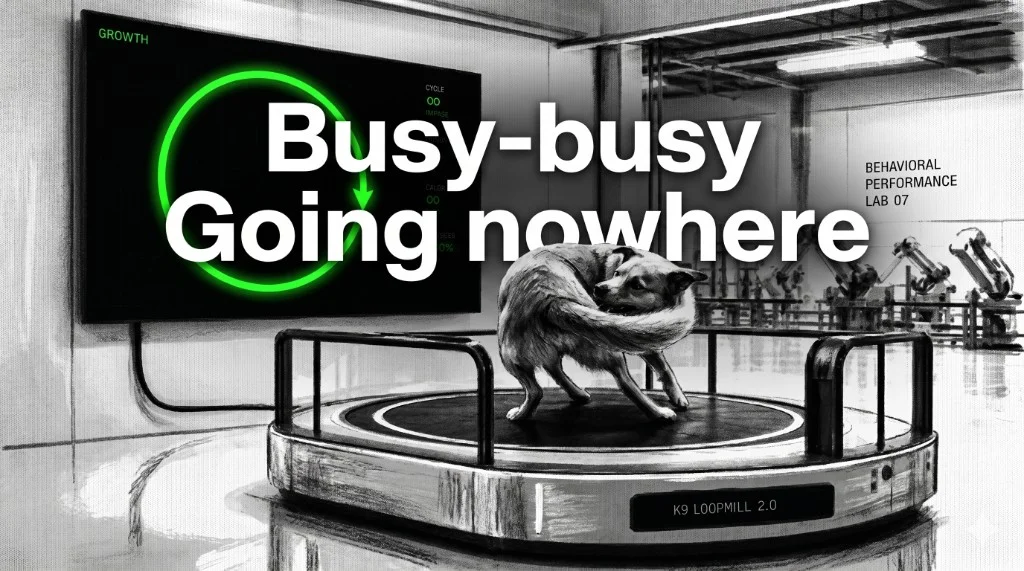
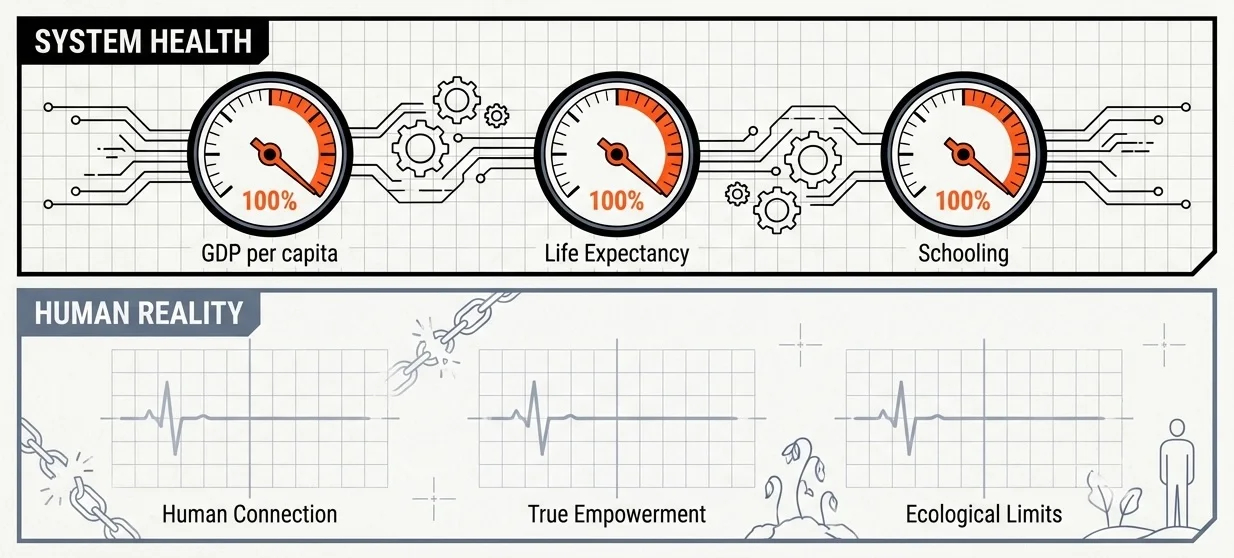
Most developed countries run as well-serviced factories: HDI and World Happiness scores mostly track how well the machine runs, not how people live, relate, or feel.Thoughts
Rich nations are what we aspire to, but their metrics track output, not how people live. No one talks about how you lose the time you have for people.
Let’s give it a name: well-serviced factories. They are systems built to last (a high bar for a machine, but not the same as a developed society).
When the engine leaves no time for people
A “developed country” is a high-output machine:
- High GDP, services that work, and a bureaucracy that covers everything.
- Healthy, educated people kept busy enough to work and consume.
- Rules get enforced socially; people police each other to make sure no one steps out of line.
- Where growth comes first, and power tends to stay put.
When the engine runs faster, there’s no time left for connections.
Some factories add cushions; power still stays put
Some countries soften the blow:
- Health and education for the majority.
- Pensions, unemployment insurance, and laws that protect workers.
- A little more quality of life, personal freedom, and a safety net that catches you if you fall.
Places like Australia, New Zealand, Canada, and parts of Western Europe top the “happiness” and “freedom” charts, with some (especially the Nordic nations) putting enough checks and balances in place to keep the system from blowing up its people.
The real leap is when people keep the State in check (like Iceland jailing bankers or Sweden enforcing radical transparency). That’s where power stops sitting with a small group. But that’s rare. It only happens when enough people push back. And usually there’s no energy left for that.
When life sits in the center, not productivity
A society that truly works puts life at the center. This isn’t about dodging work, but about doing work that actually sustains your people, instead of just fueling a machine.
That flips your priorities:
- Family and tribe, not productivity.
- Money in service of life, not the other way around.
- Real autonomy: stepping away without ending up on the street.
- Independent minds: thinking for yourself, not just obeying orders.
Throughout history we’ve seen this in indigenous lifeways, co-ops, and experiments like Bhutan. No modern nation has pulled it off at scale yet. Why fix what’s not broken, even as it wears you down?
The factory will not slow down for you
Factories are not built to change. They are built to run. You don’t rebuild a factory while it’s running.
But accepting reality doesn’t mean doing nothing about the future.
Everything starts with imagination. Our brains evolved to simulate realities that don’t exist yet, then build them. The challenge is to use your time, skills, and small groups to build a different future, not to speed up the old factory.
The factory won’t slow down for you. Build something else, or get pulled back in.