🎭 The deniability hood: why groups prefer not to know
Claim
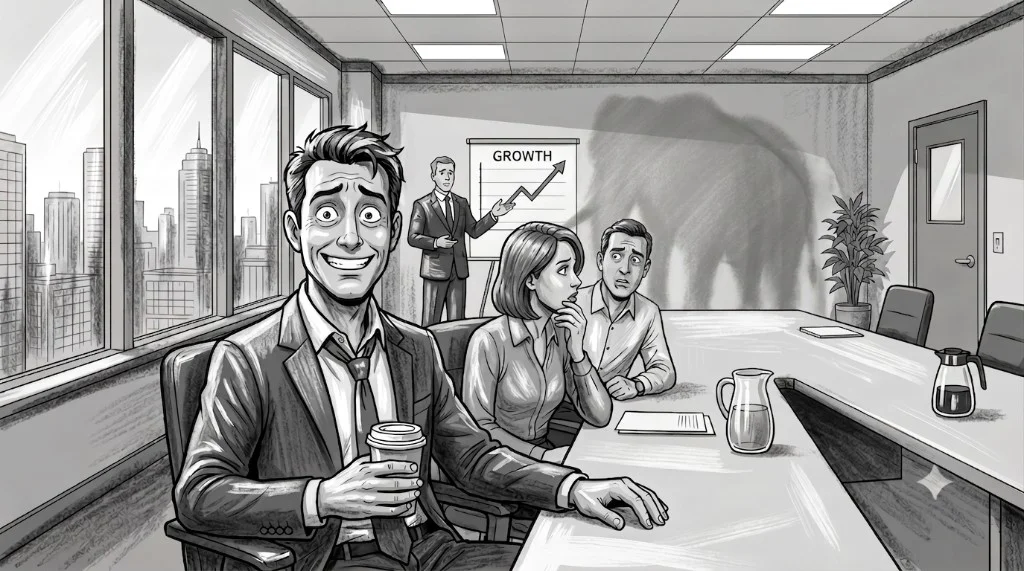
When a group adopts a clean public story (“safety,” “tradition,” “helping people”), that deniability hood lets hidden motives operate under cover. Public ignorance is the shield; the pretext does not need to fool everyone, only to block the chain of shared certainty that would trigger punishment.Thoughts
In The Elephant in the Brain, Kevin Simler and Robin Hanson argue that human behavior is driven by hidden motives we rarely acknowledge, even to ourselves. The paradox sounds wrong at first: shouldn’t ignorance be most useful when it is hidden?
What they said
It’s never useful to have secret gaps in your knowledge, or to adopt false beliefs that you keep entirely to yourself. The entire value of strategic ignorance and related phenomena lies in the way others act when they believe that you’re ignorant. Ignorance is at its most useful when it is most public.
The deniability hood
We think of ignorance as a private failing: something to hide, not to share. When ignorance is shared openly, when it becomes the group’s official posture, you appear wearing a deniability hood: a socially accepted story that everyone can see and pretend to believe. That hood stops private suspicion from becoming the shared, undeniable fact that would make punishment possible.
Plausible deniability
Discretion creates ready-made excuses or alibis. Skirting a norm instead of violating it outright prevents a norm violation from becoming full common knowledge, which makes it more difficult to prosecute. The pretext doesn’t need to fool everyone; just plausible enough to make people worry that other people might believe it.
Publicly stating a clean motive (“I’m doing this for safety”) gives the group a story they can officially accept. Even if many suspect the real motive is something else (status, money, power, spite), the public story blocks the chain of “everyone knows everyone knows” that would be needed for collective punishment. Challenging it makes you the deviant, not the liar.
Does deniability change behavior?
The setup
Gillies and Rigdon (Rutgers) ran a simple trust game: one person risks money; the other chooses whether to share the gains or keep them. They did not change the stakes. They only changed what each person was told about the stakes:
| Situation | What’s going on | Hood? |
|---|---|---|
| Both saw the spreadsheet | Investor and partner both know exactly what fair looks like | Off |
| One-sided cover | Partner knows the full picture; investor cannot prove the partner knew | On (this is the hood) |
| Nobody shared the map | Each side only knows their own piece | Fog |
One-sided cover is the hood in the lab. The partner knows that keeping everything will hurt the investor, but also knows the investor cannot prove the partner saw the full stakes. The story does not need to fool anyone. It only needs to stop “everyone knows everyone knows,” so nobody can rally punishment with confidence.
The results
| Situation | Grabbed everything |
|---|---|
| Both saw the spreadsheet | 54% |
| One-sided cover | 88% |
| Nobody shared the map | 97% |
As Gillies and Rigdon put it: “the presence of plausible deniability is enough to tempt otherwise cooperative types to eat the whole pie.” Put plainly: people who would have shared under open books grabbed once one-sided cover gave them an out.
Why the paradox resolves
Shared public ignorance blocks common knowledge and makes the whole group complicit. If everyone wears the hood, calling someone out exposes you too. Everyone suspects; nothing happens until private doubt crosses into common knowledge, the trigger that makes coalitions to punish possible.